
Cactus Removal
Cactus Removal Near Me
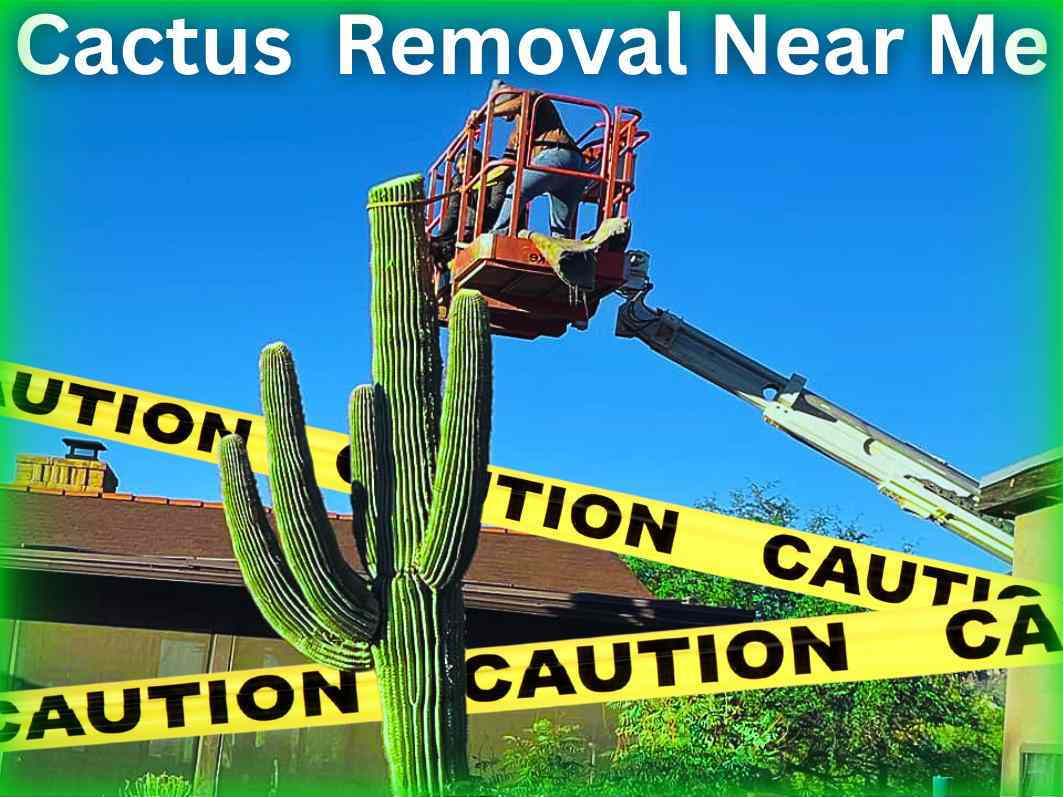
Gilbert Tree Trimmers™ has been removing cactus in Gilbert for over a decade, and we have the expertise, professional equipment, and spotless safety record to handle your project, no matter how big it may be. Species such as Saguaro cactus, Prickly Pear cactus, and Barrel Cactus can grow to be very large in captivity, and can be difficult or dangerous to remove if not handled by professionals. Our Gilbert cactus removal team is professionally trained, knowledgeable, experienced and courteous, to ensure that your cactus removal project is performed safely and efficiently. Also, if you're looking for cactus removal near me in Gilbert Az, Chandler, Mesa or Tempe, just give our Arborists a call today to schedule your Free Quote!
FREE Quote!

Saguaro Removal
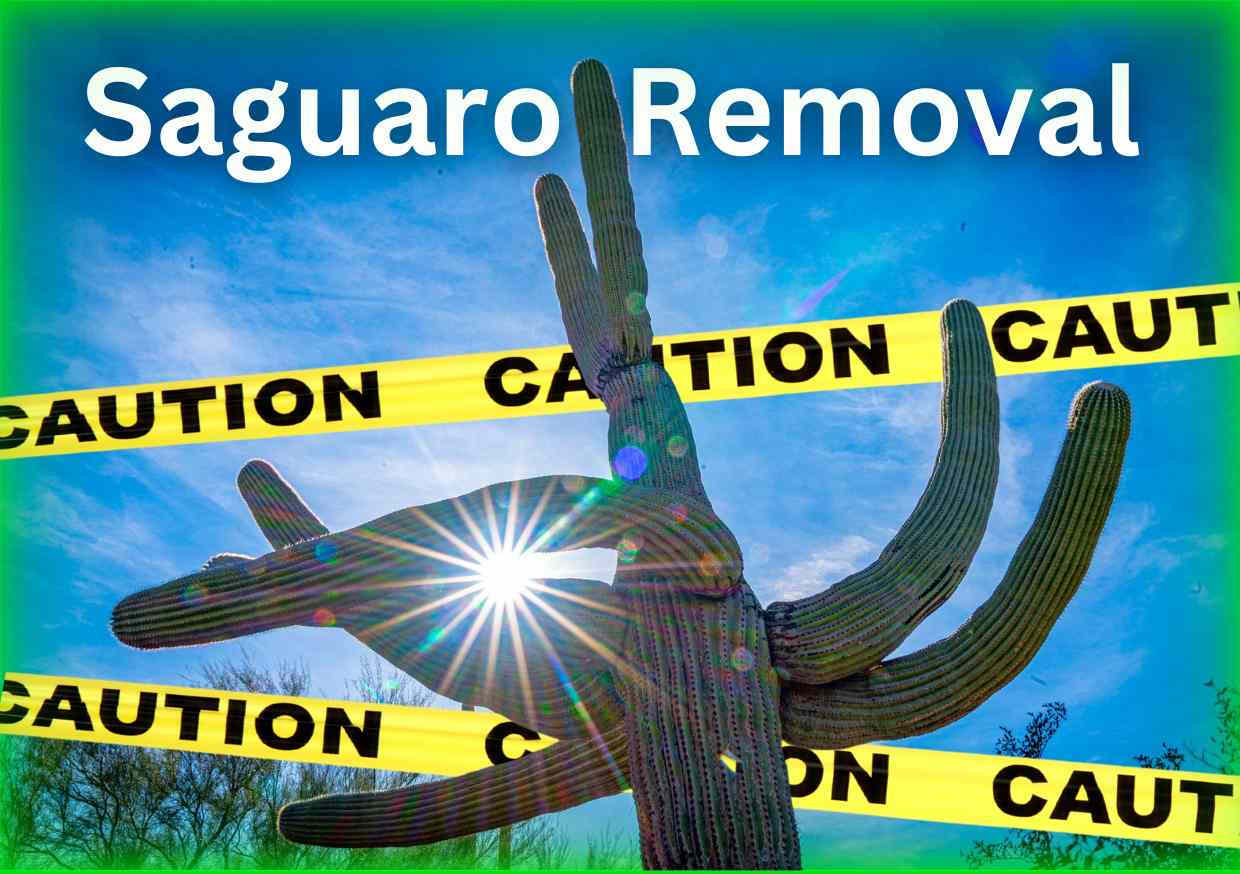
Although large cactus species such as Saguaro can add aesthetics and value to your property, they can also grow at an amazingly fast pace when allowed to grow in captivity, such as a yard that has an irrigation or drip system. Cactus such as Saguaro will send its surface root system in all directions searching for a water source, and once found, the growth and size of the cactus can actually outgrow the ability of its root system to support itself. This is the reason that many Saguaro cacti in captivity will lean as they grow taller, and in many cases, they can fall to the ground without warning. In addition to their fast growth rate in captivity, Saguaro cactus are also susceptible to air-borne disease and infection, such as Bacterial Necrosis, which attacks the cactus from the inside, oftentimes not even visible until the health condition of the cactus is beyond repair.
FREE Quote!
Cactus Removal
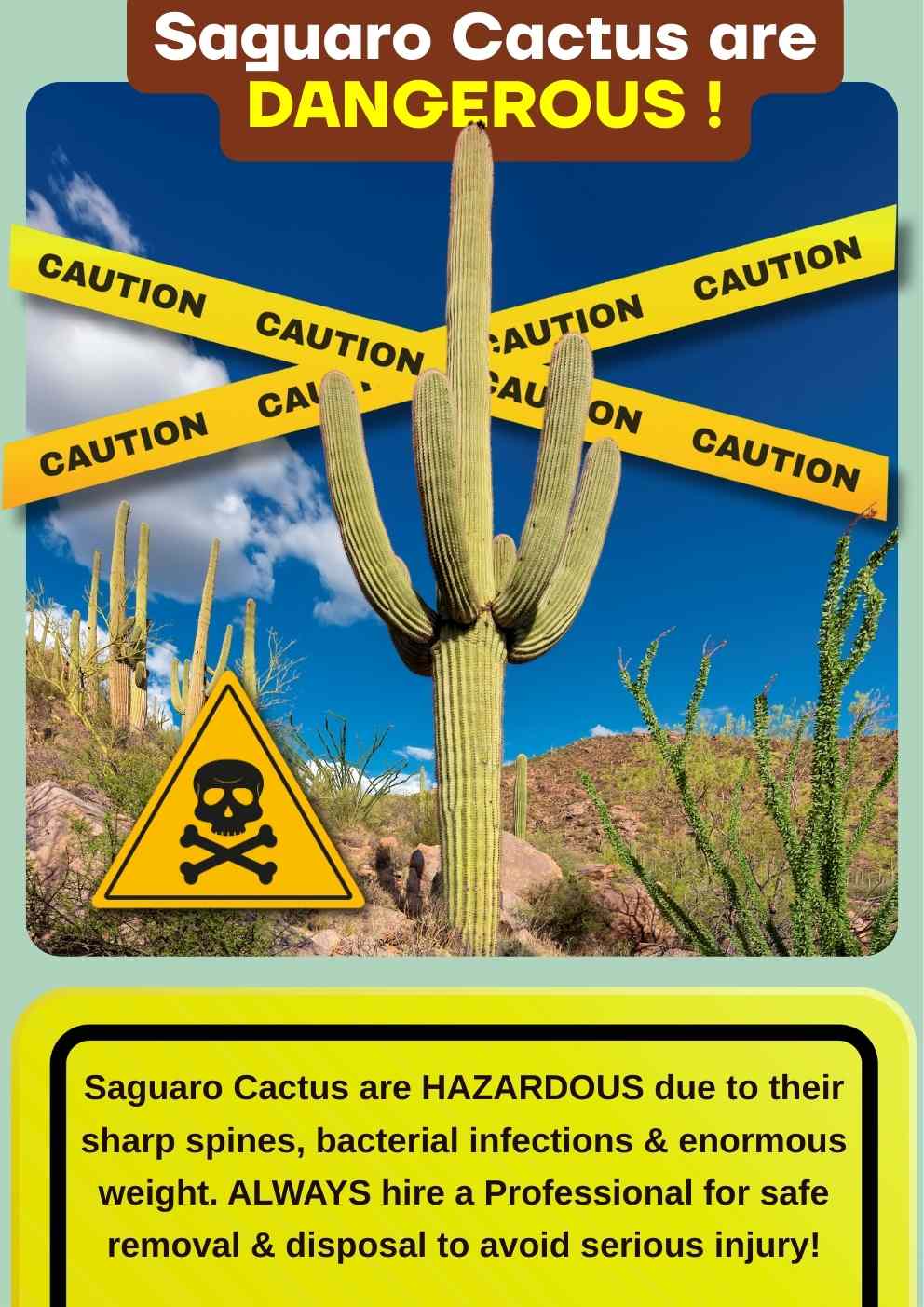
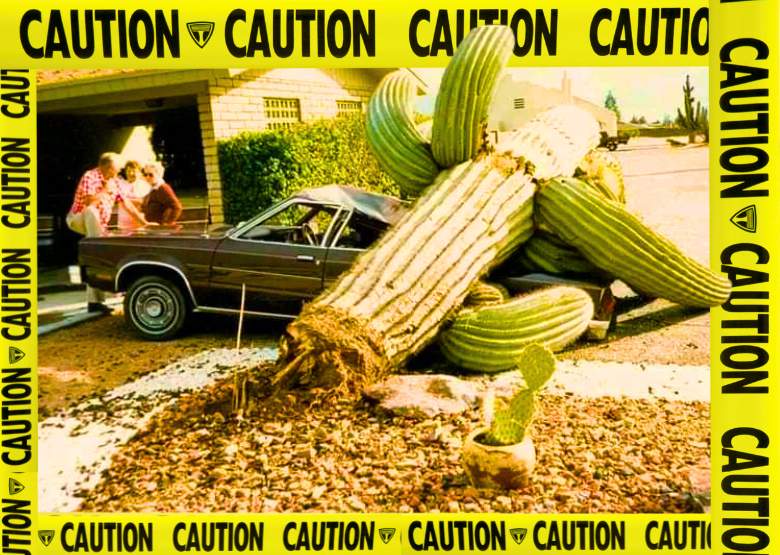
Situations such as these are the most dangerous, because the cactus can randomly fall to the ground, crushing everything in its path, such as homes, vehicles, and in some cases, even people. This is one of the many reasons to have cactus removal performed, since it is not worth risking property or persons over a cactus that is unsafe. By the way, if you need a Free Quote for Saguaro Removal or cactus removal service in Gilbert Az, Scottsdale, Chandler, Tempe or Mesa, call our Arborists for your Free Estimate!
FREE Quote!
Saguaro Removal Cost
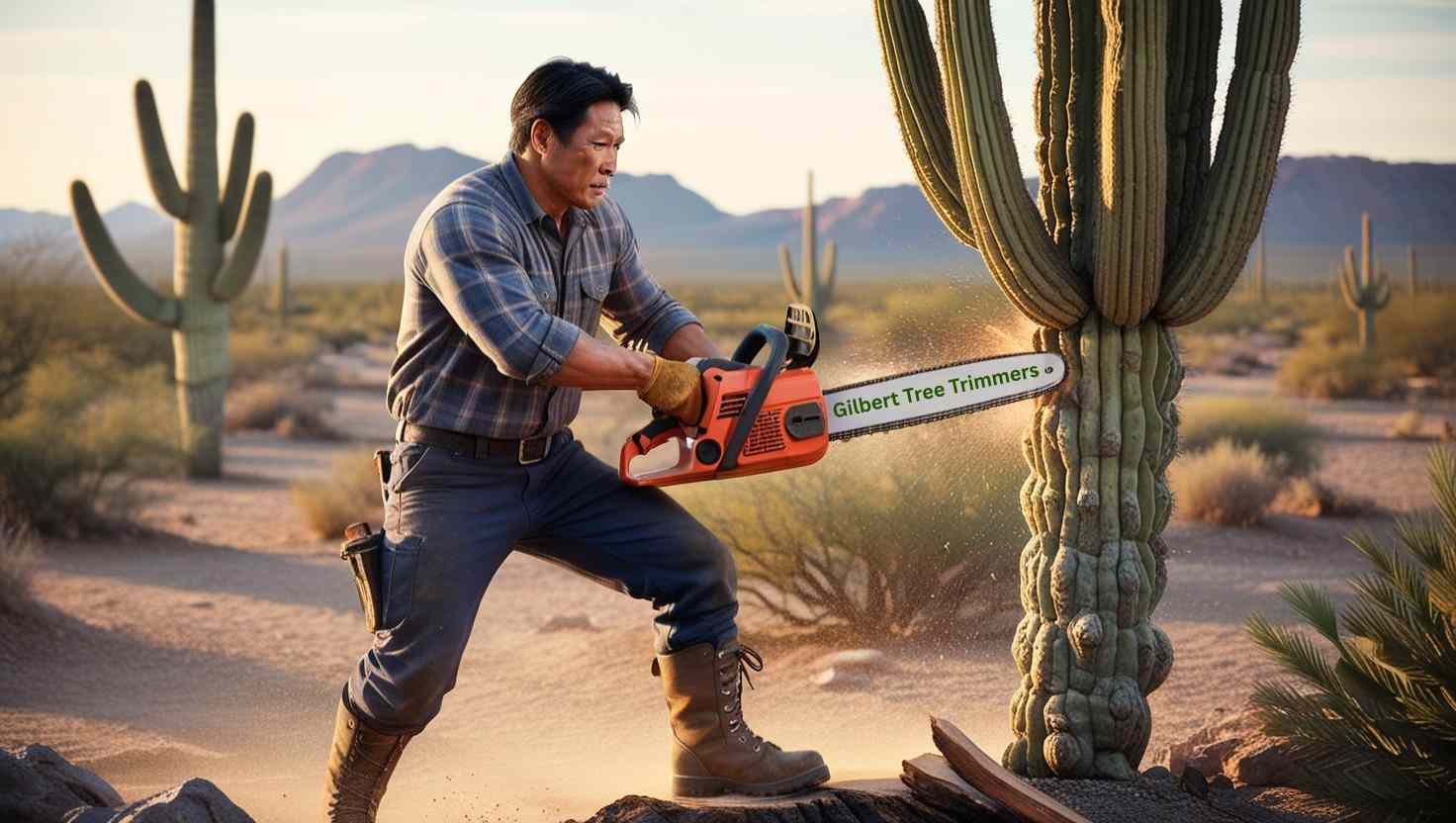
Curious about Saguaro Removal cost? Need a Free Quote for Saguaro Cactus removal? Just give us a call today to schedule your Free Estimate to remove that Saguaro Cactus! Remember, we service Gilbert, Chandler, Mesa, Tempe, Phoenix, Scottsdale, Paradise Valley, Ahwatukee, Apache Junction & everywhere in between. Just give our Arborists a call!
FREE Quote!
Cactus Removal Cost
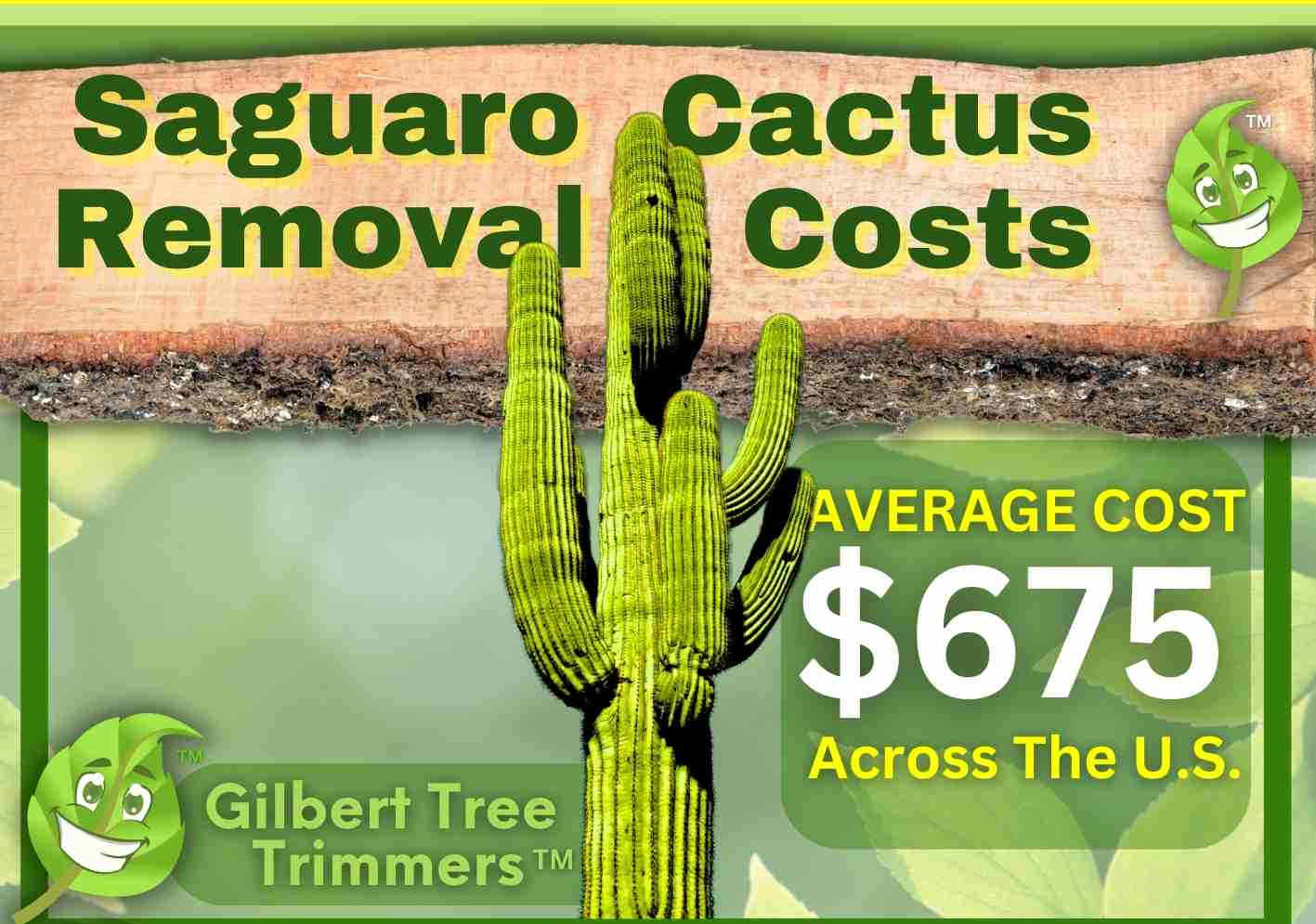
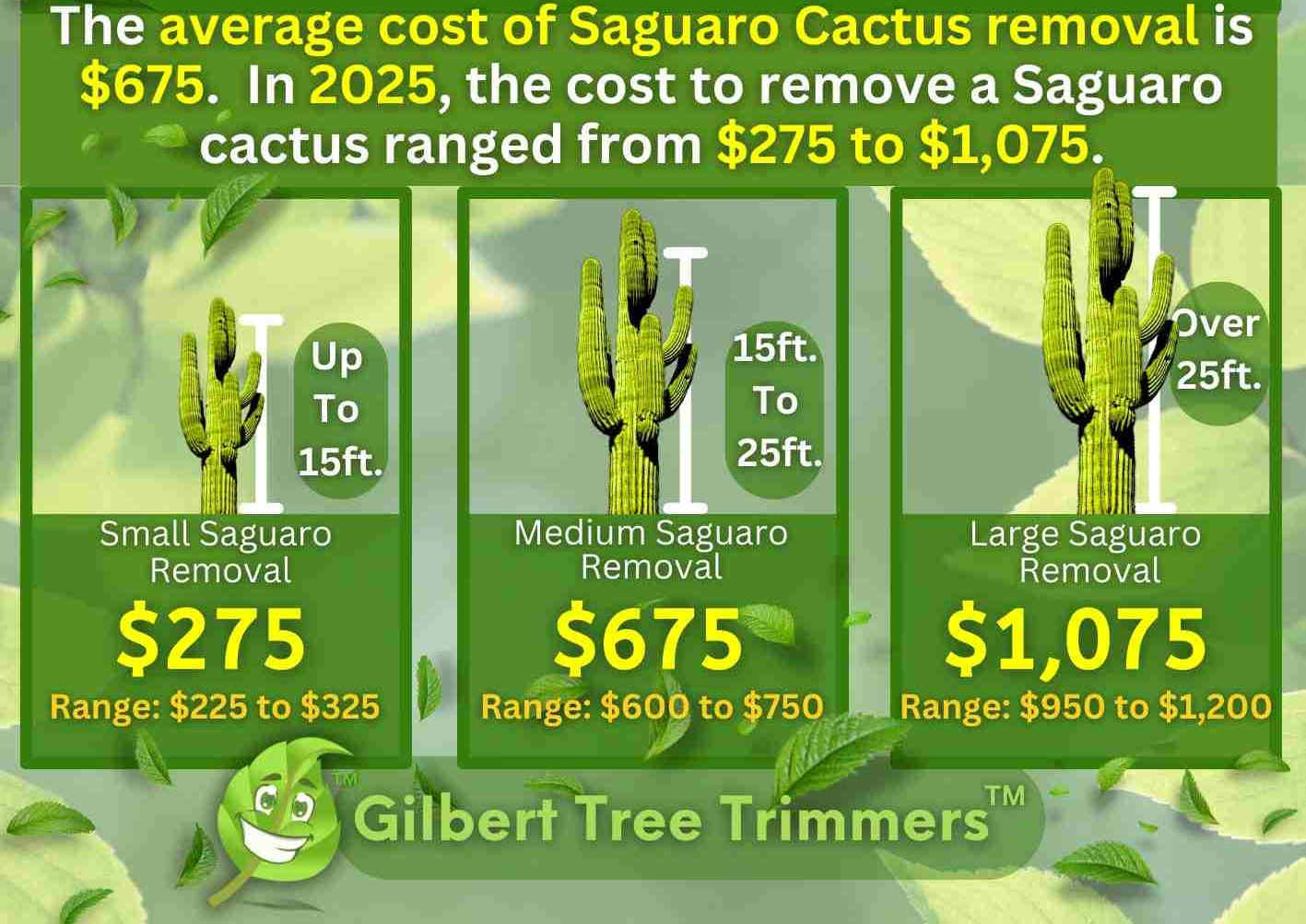
In 2026, the average cost for Saguaro cactus removal in Arizona is $675. The lowest cost you might pay in the Phoenix, Az area is $275, while the highest cost for large Saguaro cactus removal service is around $1,075, according to ValleyTreeTrimmers.com.
Saguaro Cactus Removal Average Cost: $675
Saguaro Cactus Removal Low Cost: $275
Saguaro Cactus Removal High Cost: $1,075
Saguaro Cactus Removal Cost Range: $275 - $1,075
Book a
FREE Quote!
Saguaro Cactus Removal
Saguaro Cactus Removal: Table of Contents
- 1. Reasons Why a Saguaro Should Be Removed
- 2. Why DIY Removal of a Saguaro Is Risky
- 3. Why It Costs So Much to Remove, Haul Away, and Dispose of a Saguaro
- 4. Typical Cost Ranges & What to Expect
- 5. Practical Tips for Homeowners Considering Removal
- 6. Summary
1. Saguaro Cactus Removal: Why, When, and What It Really Costs

The saguaro cactus is one of the Southwest’s most recognizable plants. Towering and sculptural, saguaros can live for many decades and grow to enormous sizes. But they’re not indestructible — saguaros can become diseased, lean, or decline structurally, and in those cases, removal may be necessary. Removing a saguaro isn’t a casual landscaping task — it carries legal, physical, and financial implications. Below we’ll walk through:
- Reasons a saguaro might need to be removed
- Why DIY removal is risky
- Why removal, hauling, and disposal are costly
2. Reasons Why a Saguaro Should Be Removed
Even though saguaros are beloved, there are several legitimate reasons a homeowner might need (or be required) to remove one. These include safety hazards, disease, interference with construction, aesthetics, and legal/regulatory concerns.
A. Safety Hazards
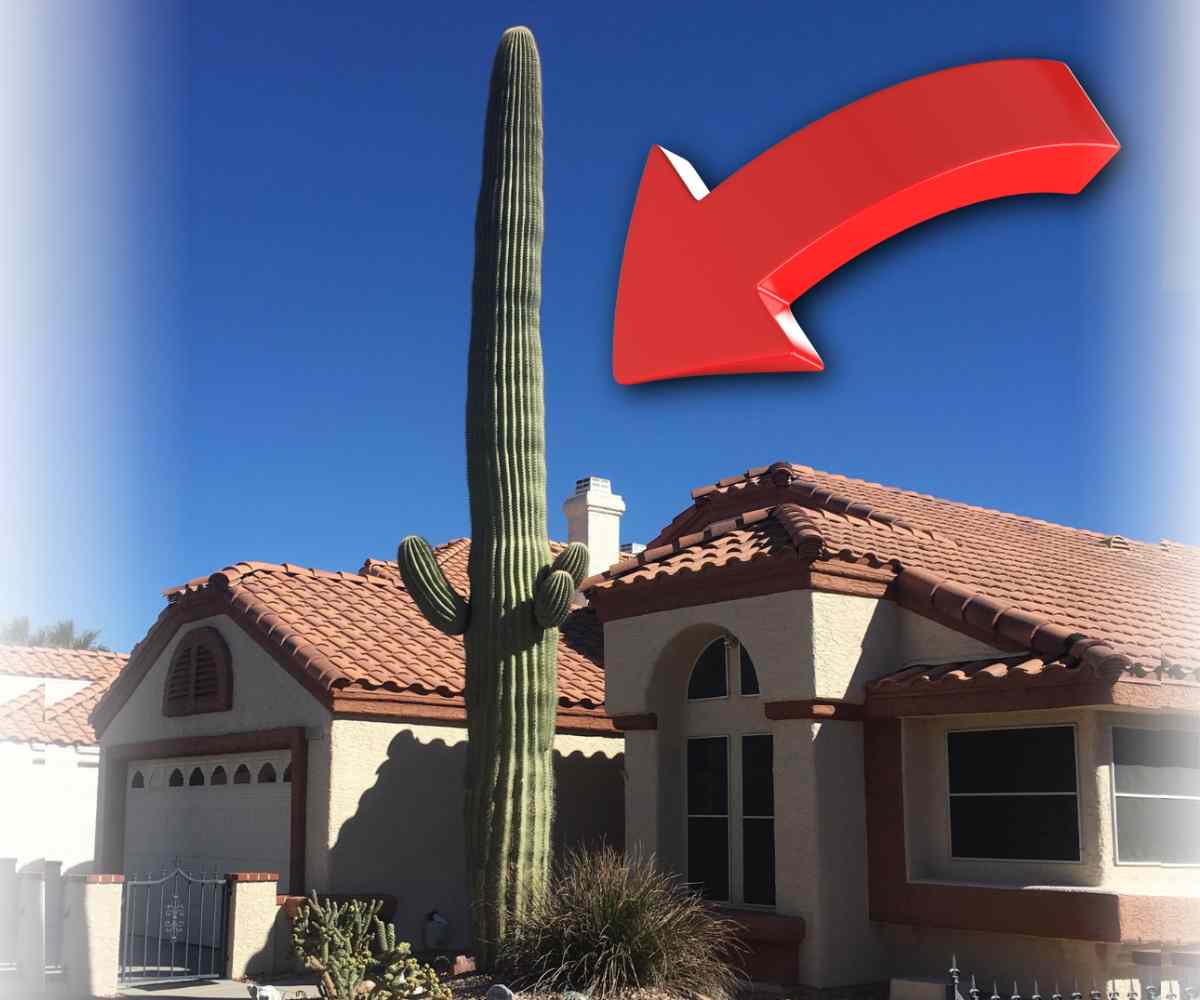
Over time a saguaro may lean, develop a weakened base, or become top-heavy—particularly as arms develop and the plant grows larger. A fully matured saguaro can weigh thousands of pounds when saturated with water. If a saguaro is close to a house, patio, window, or utility line, the risk of it falling and causing damage or injury increases. Storms, high winds, and root or trunk rot can accelerate these risks. For more information, see the National Park Service Saguaro Facts.
B. Disease, Infestation, or Structural Failure
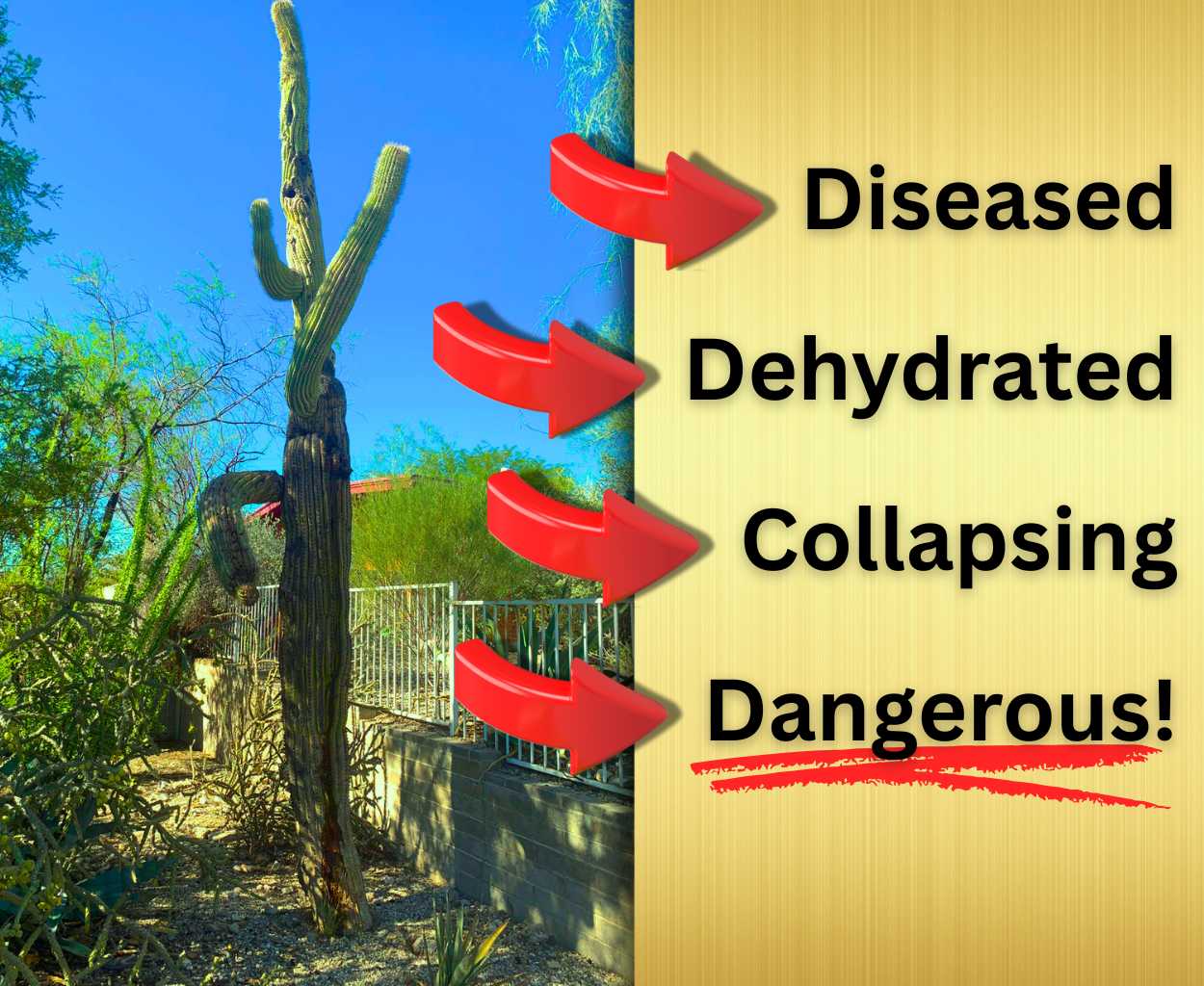
Saguaros, like all living things, can be subject to disease, soft-rot, pests, or internal decay. A decaying or hollowing cactus is unstable and may split or collapse unexpectedly. In those cases, removal is often the safest option for the property owner. Learn more about cactus diseases from University of Arizona Extension.
C. Construction, Renovation, or Landscaping Plans
If you’re renovating, adding a pool, garage, driveway, or other structure, a saguaro may block the intended footprint or access. Because saguaros have wide, shallow roots and a deep tap root, their presence can also complicate foundation work, plumbing, or underground utilities. Reference: Sonoran Institute - Saguaro Conservation.
D. Property and Aesthetic Reasons
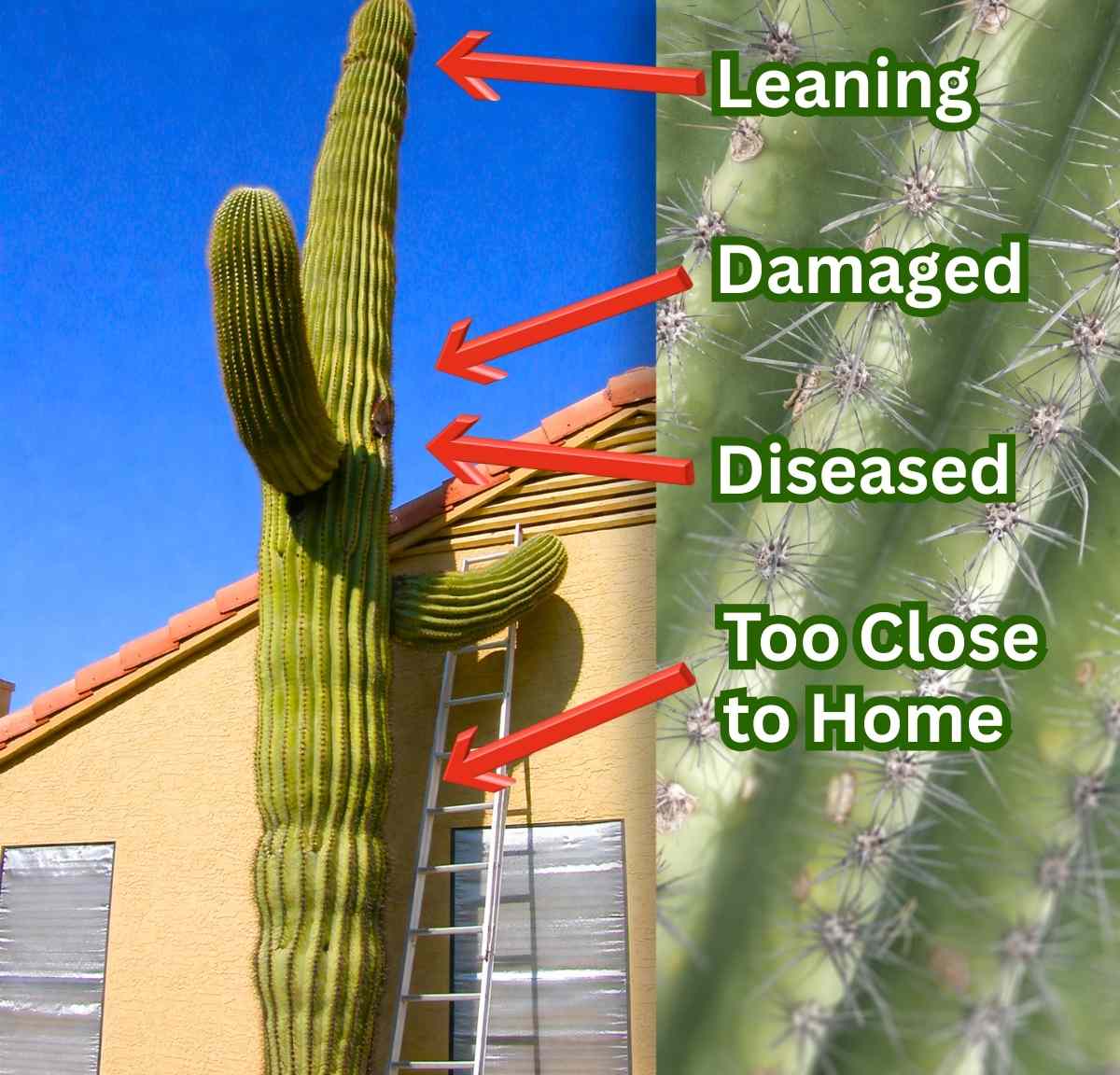
Some homeowners find a large saguaro obstructs views, reduces usable outdoor area, or doesn’t fit a new landscape design. While many celebrate saguaros for their beauty, they can be large, unwieldy, and difficult to incorporate into certain aesthetic plans.
E. Legal and Regulatory Pressure
In Arizona and parts of the Sonoran Desert, saguaros are protected by native-plant laws. You can’t always remove one without complying with permits, notifications, or other regulations. Ignoring those rules can result in fines or mandatory remediation. For official legal guidance, see Arizona Game and Fish Department - Saguaro Regulations.
3. Why DIY Removal of a Saguaro Is Risky
The temptation to save money by removing a saguaro yourself is understandable, but this is not an easy weekend job. Here are the main risks and complications:
A. Structural and Physical Complexity
Mature saguaros can exceed 20–40 feet in height and carry multiple arms. Internally, the plant consists of a woody rib skeleton surrounded by fleshy tissue. Cutting a large cactus without an experienced plan can lead to unpredictable falls and dangerous shifts in weight. Shallow but wide roots make the plant’s stability difficult to predict when cutting begins.
B. Sharp Spines and Injury Potential
Saguaro spines are long, sometimes barbed, and capable of causing deep puncture wounds that may become infected. Handling or cutting arms can throw spines, and large sections sliding across the ground can impale tires, feet, or limbs. The physical hazard alone is a major deterrent to DIY work. Safety reference: Occupational Safety and Health Administration.
C. Equipment & Expertise
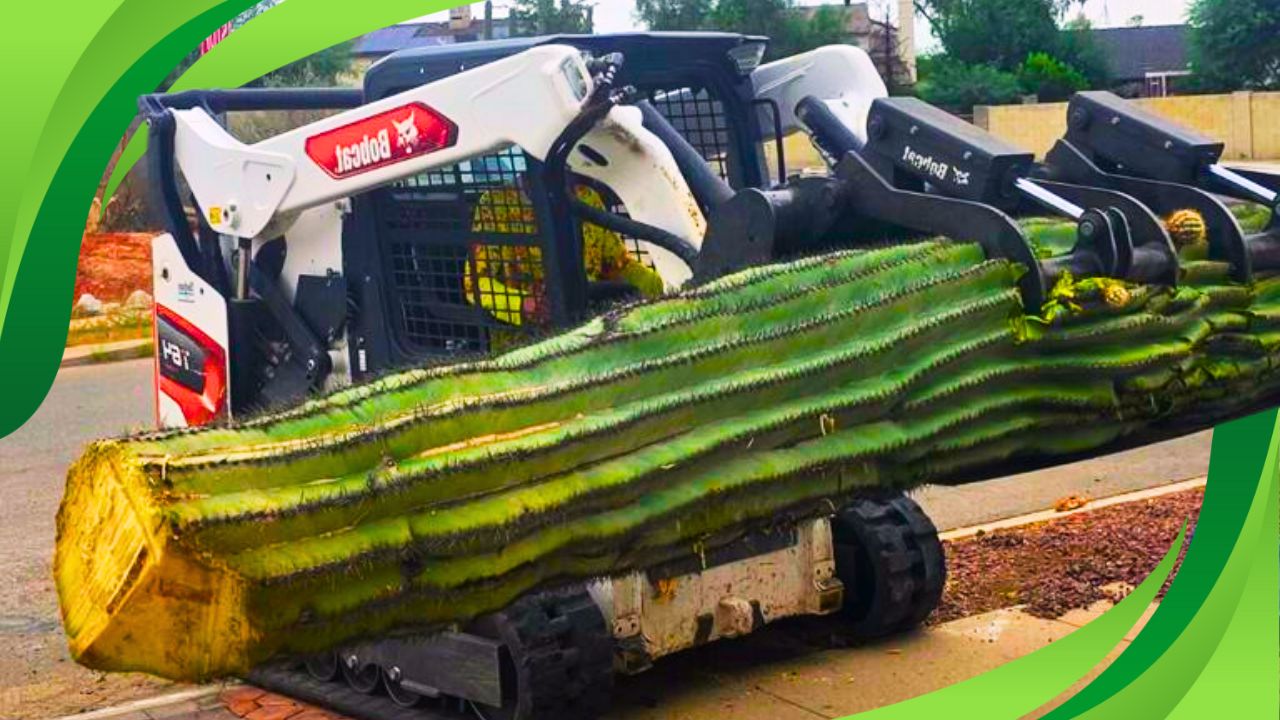
Large saguaro removal commonly requires specialized equipment: cranes, boom lifts, heavy ropes, pulleys, chainsaws, and sometimes earth-moving equipment for root removal. Professionals also plan fall paths, secure the area, and coordinate multiple workers to keep the site safe. Without that equipment and experience, a DIY job can quickly become dangerous — and more expensive if it damages property or causes injury. Source: Arizona Tree Services - Saguaro Removal.
In short: while a DIY removal is possible in rare, small cases, most mature saguaros require professional removal for safety and legal compliance.
4. Why It Costs So Much to Remove, Haul Away, and Dispose of a Saguaro
If you’ve received quotes that seem high, there are a number of sound reasons for the cost. Below are the major cost drivers behind saguaro removal.
A. Size, Weight & Accessibility
Large saguaros are heavy and awkward. Cost is often determined by the cactus’s height, arm count, and how accessible it is for trucks or equipment. A cactus in an open yard near a road is far cheaper to remove than one behind a fence or next to a house. Tight access increases labor time and equipment needs — and therefore cost.
B. Specialized Equipment & Labor
Removing a big saguaro may require cranes, boom lifts, specialized rigging, heavy chains, stump grinders, and several trained workers to manage the cut, direct the fall, and handle debris.
C. Permits and Regulatory Compliance
Because saguaros are protected in many places, permit processing or notifications to state agencies can be required. Companies that remove saguaros typically handle the paperwork, which adds time and administrative cost to the job. Reference: Arizona Game and Fish Department.
D. Disposal, Hauling, and Environmental Considerations
After the cactus is cut, large sections must be hauled away — often in large trucks or trailers. Disposal sites may charge fees, and special handling may be required because of the spiny nature of the waste. Some salvage or transplant options exist for particularly large or valuable specimens, but those increase complexity and cost.
E. Insurance, Risk, and Overhead
Removal companies must cover worker insurance, maintain equipment, comply with safety regulations, and account for overhead like fuel and transport.
F. Value and Opportunity Cost
Large saguaros are iconic — and in some cases have salvage or resale value. Handling a large specimen carefully for potential transplant or sale requires more time and expertise.
5. Typical Cost Ranges & What to Expect
Costs vary widely by region and job complexity. To give a rough idea of possible ranges:
- Easy access, small saguaro: around $400
- Medium size, moderate complexity: approximately $500–$1,000+
- Large, difficult access, or near structures/utilities: $2,000–$3,000+ (and sometimes higher)
6. Practical Tips for Homeowners Considering Removal
If you’re weighing options for a saguaro on your property, these steps will help you make an informed decision:
- Ask about permits. Confirm whether the contractor will handle filings and notifications required by law.
- Clarify what’s included. Does the quote include stump removal, hauling, disposal fees, and site clean-up?
- Check insurance and references. Hire companies with experience handling saguaros and proof of insurance.
- Have the contractor assess access and fall path. A thorough evaluation prevents surprises during the job.
- Document condition before/after. Photos protect you and the contractor if questions arise.
- Consider alternatives. If the cactus is healthy and not hazardous, options like bracing, monitoring, or partial arm removal may suffice.
7. Summary
The saguaro cactus is a treasured symbol of the Southwest, but when it becomes a safety hazard, obstructs property plans, or succumbs to disease, removal may be necessary. Removal is risky to attempt as a DIY project due to the plant’s size, spines, and unpredictable structural behavior. The price tag for professional removal reflects size and access challenges, specialized equipment and labor, permit and disposal requirements, and the insurance and overhead companies must carry.
If you have a saguaro that might need attention, get a few professional assessments, confirm the permit requirements in your area, and choose a provider experienced with saguaros to ensure safety and legal compliance.
FREE Quote!